Entry by: Cluster Labs // 12.11.2026
Site analysis is taught mostly by inheritance. Each office and each school carries its own list of what to study before changing a place, learned from whoever came before. Ask ten teams what a reading should cover and you get ten partial lists, each catching something the others missed.
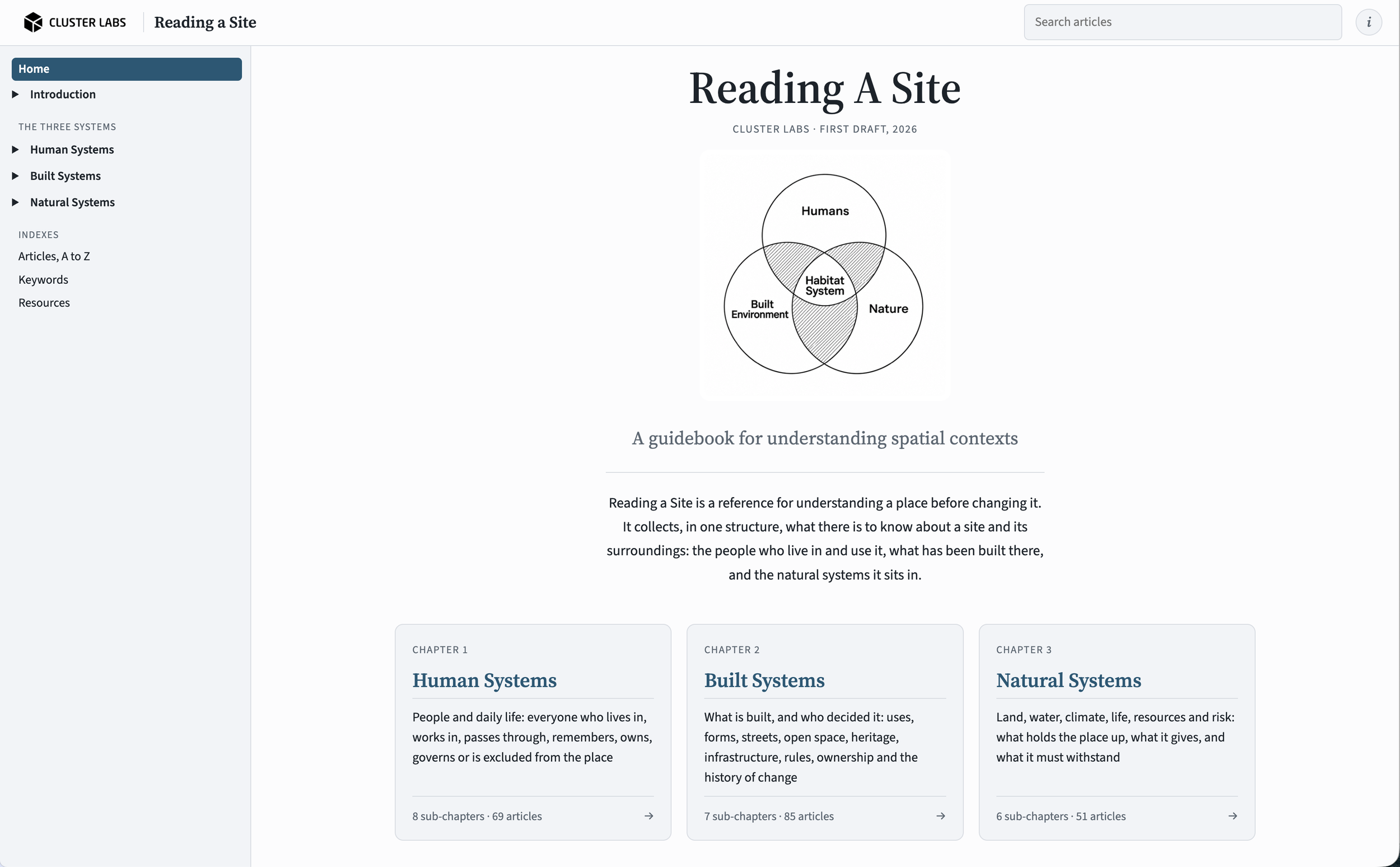
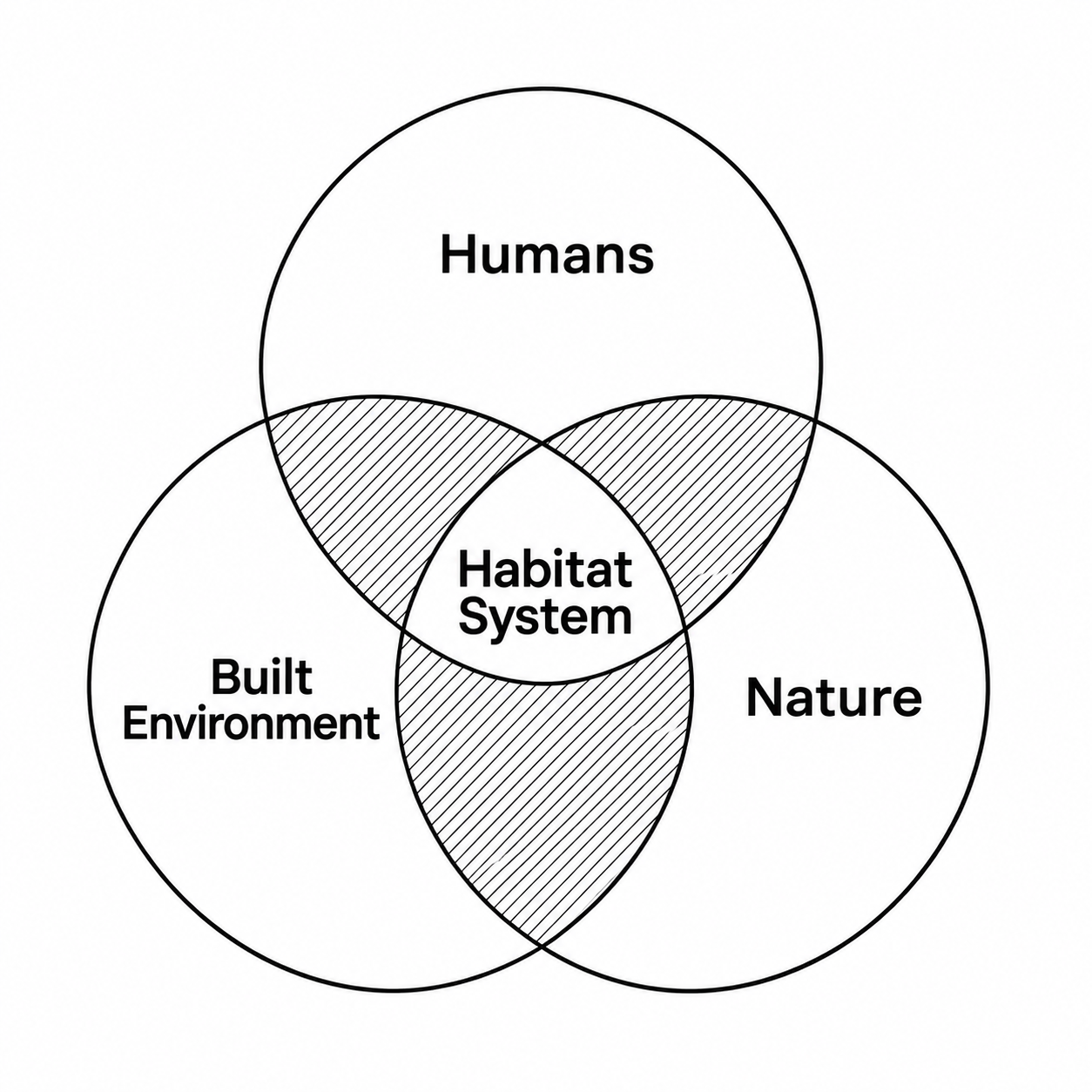
At Cluster Labs we read every environment through three systems — human, built and natural — and treat the place where they overlap as the habitat. It is the framework behind our project work, our teaching and our platforms, and Reading a Site is it written out in full.
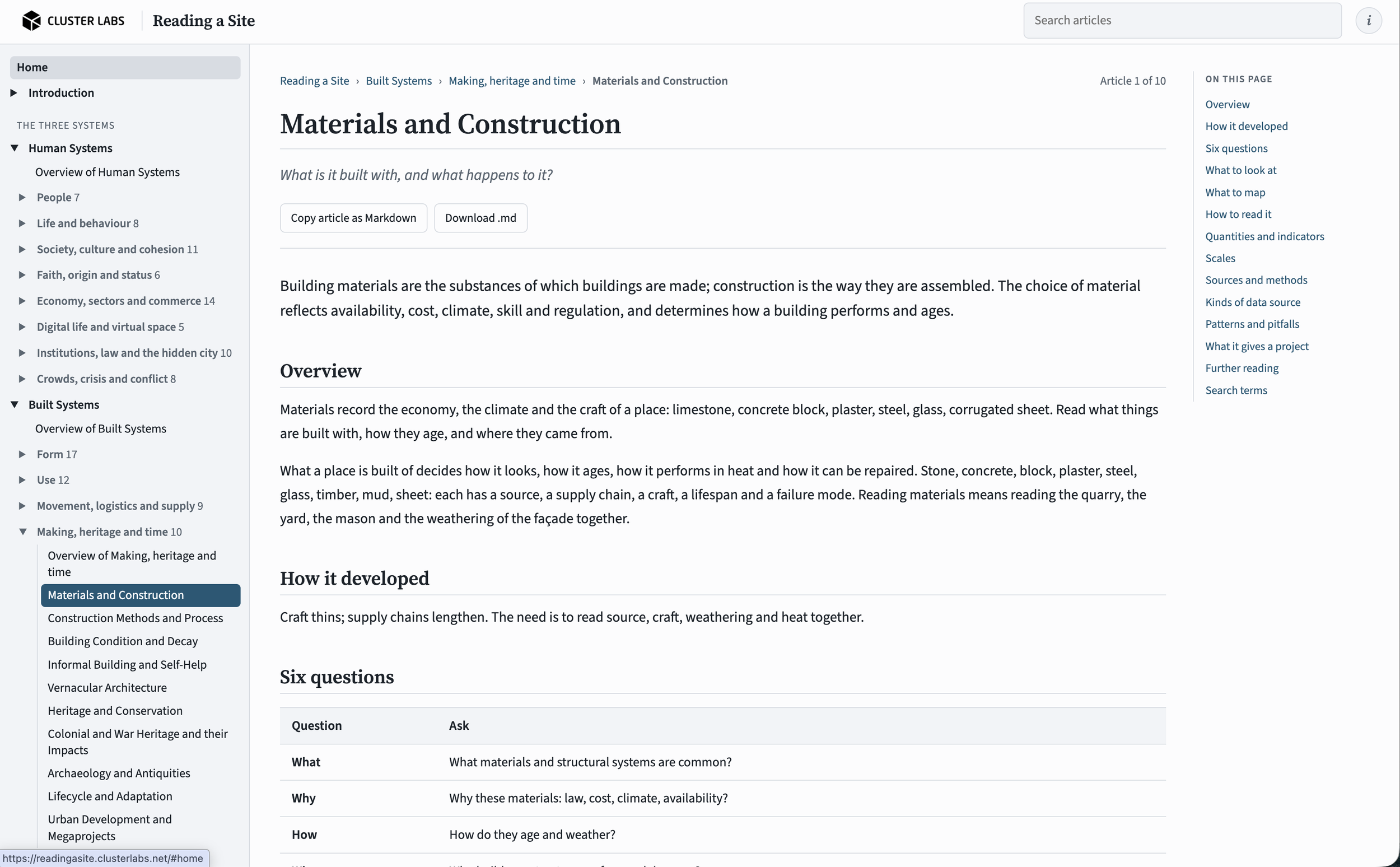
The first draft holds 205 articles across those three chapters, from household structure, informal economies and prayer rhythms to soil, drainage, zoning, heat and ruin. Each article explains a subject in general terms, then sets out what to ask, what to look at, what to map, what to measure, and where to read further. It describes no particular city. Facts and data about real places attach to this structure as a second layer, which is what makes it useful as the base of an atlas rather than only a book.
There are three reasons it is going out open, as a portal rather than a file.
The first is the gap between academia and practice. Students are taught frameworks they rarely see applied, and offices apply methods they rarely write down. A shared reference gives both sides the same vocabulary and the same checklist.
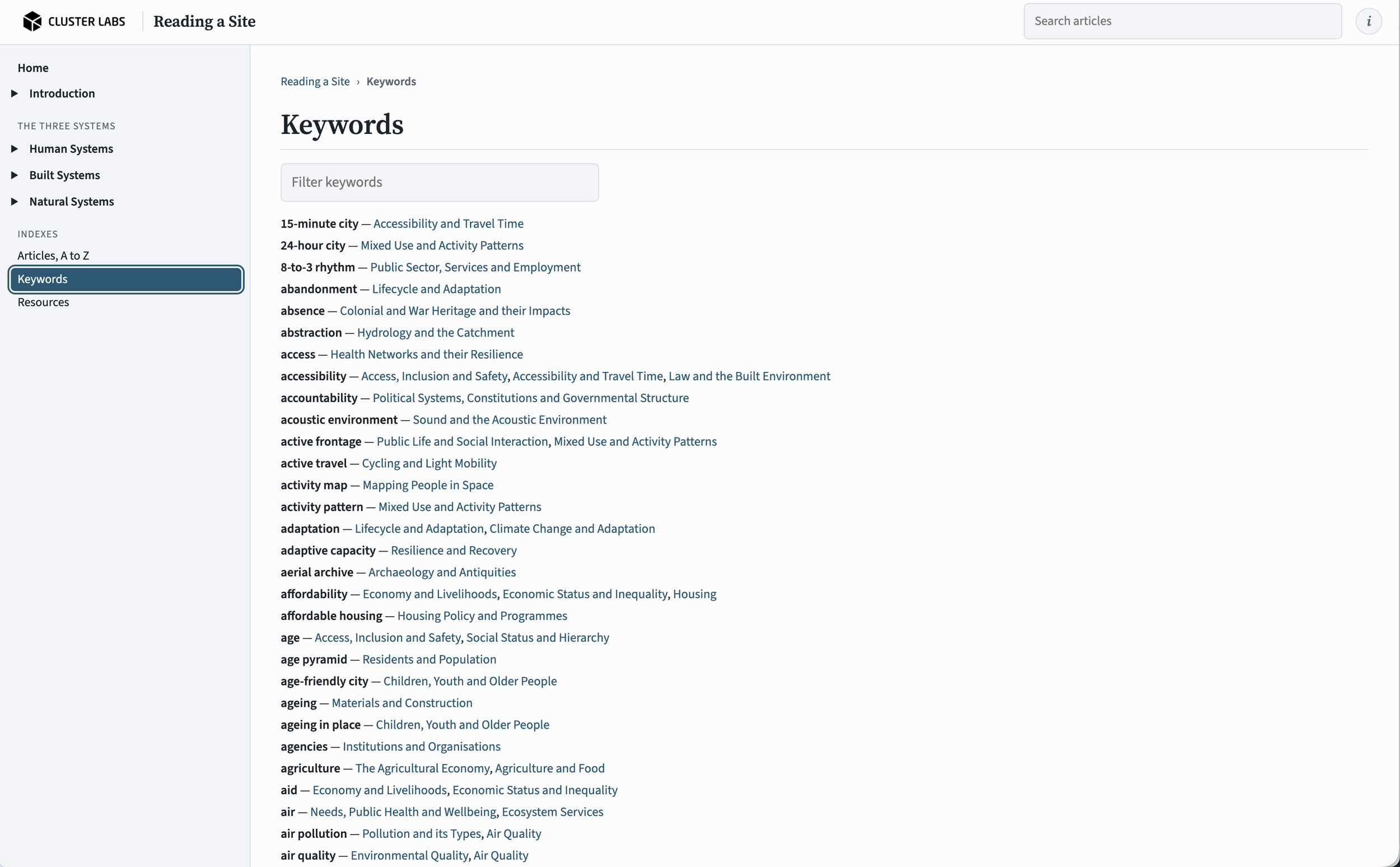
The second is that knowledge about places is worth more pooled than held. None of this is invented — it is the accumulated work of many fields, put in one order and made searchable, so it can be corrected and extended by people who know a subject better than we do.
The third is practical. Ask a language model about a site today and you get something fluent, unsourced and often wrong, and you spend the session rebuilding the same context by hand. A structured, referenced body of subjects gives models and search tools something to stand on, and gives the person asking somewhere to point instead of explaining the framework again.
The reading lists still need verification and the articles differ in depth. We are publishing it as a first draft because a reference of this kind is worth more in use than finished and private.